


Campus networks are under growing pressure. Organizations must support more devices, deliver consistent performance, and maintain strong security all while keeping operations manageable. With connected devices projected to exceed 29 billion globally by 2030, network scale is no longer a future concern; it is a current reality.
At the same time, expectations have shifted. IT teams now prioritize automation, visibility, and flexibility. Traditional hardware-centric designs struggle to meet these demands, leading to increased complexity and operational overhead.
This shift has accelerated the adoption of software-defined, cloud-managed architectures. Solutions built on the Extensible Operating System (EOS) from Arista Networks offer a modern approach combining distributed design, programmability, and real-time intelligence to build scalable campus networks.
Key Takeaways:
- Arista campus networks use EOS and distributed architecture to deliver scalable, resilient, and predictable network operations.
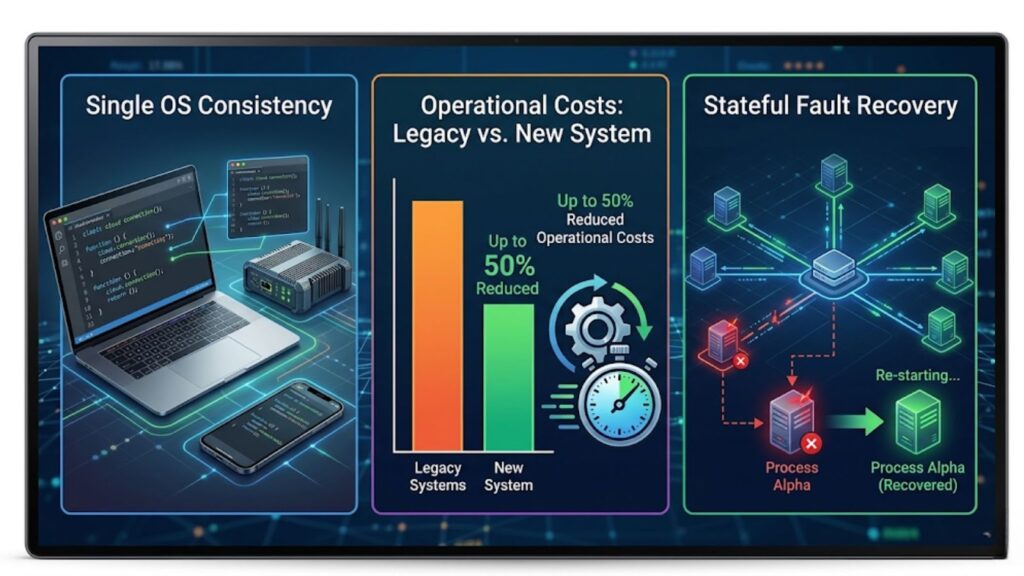
- CloudVision, automation, and real-time telemetry reduce operational costs by up to 50% and improve visibility.
- Identity-based segmentation and zero trust principles enhance campus network security across users, devices, and applications.
- Compared to controller-based models, Arista offers deterministic control, higher resilience, and simplified multi-layer network management.
Understanding Arista Campus Architecture
Arista Campus Fabric Fundamentals
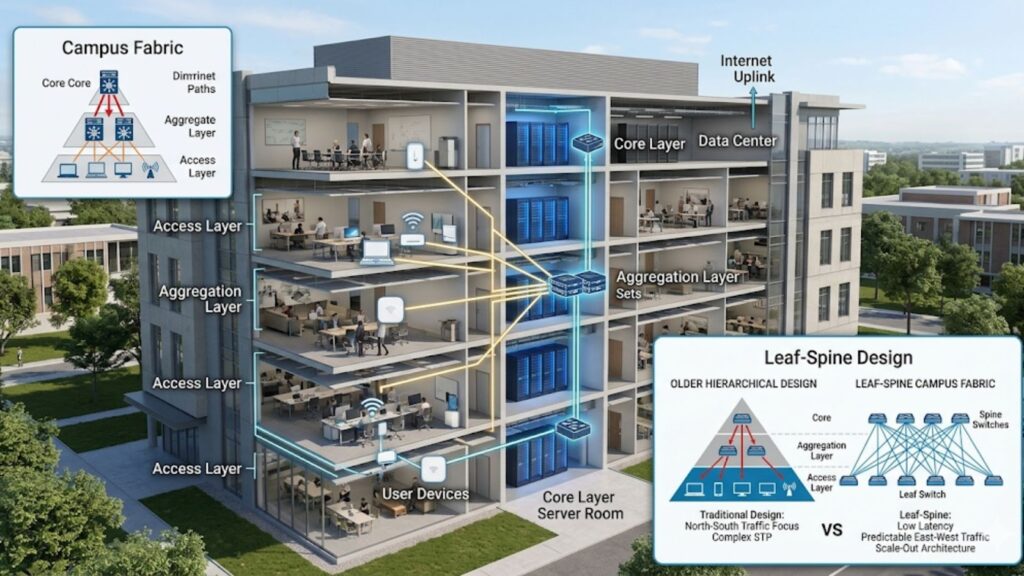
Arista Campus Fabric is designed to simplify network design while maintaining high performance. Instead of relying on multiple layers of control, it uses a distributed architecture that extends consistent policies and services across the entire campus.
The fabric approach enables seamless connectivity between access, aggregation, and core layers. This reduces the need for complex configurations and allows the network to scale horizontally without introducing bottlenecks.
Organizations exploring advanced deployments often align this with broader networking strategies to ensure consistent architecture across campus and data center environments.
Role of EOS in Unified Network Operations
EOS serves as the foundation of Arista’s campus solutions. Unlike traditional network operating systems, EOS is built on a modular architecture with a shared state database. This design allows every process to access real-time network information without disruption.
Key advantages include:
- Consistent behavior across all devices
- Programmatic access through APIs
- High availability through process isolation
This unified approach ensures that network changes, troubleshooting, and scaling activities are predictable and controlled.
Design Principles (Leaf-Spine, Distributed Architecture)
Arista adopts proven data center design principles in campus environments. The leaf-spine model ensures predictable latency and high bandwidth availability.
In this design:
- Leaf switches connect endpoints such as users and devices
- Spine switches provide high-speed interconnectivity
- Traffic flows efficiently without reliance on hierarchical bottlenecks
This distributed architecture improves resilience and supports modern application demands.
Key Capabilities Enabling Scalability

Centralized Management with CloudVision
CloudVision provides centralized visibility and control across the entire campus network. It enables administrators to manage configurations, monitor performance, and automate workflows from a single interface.
This level of control aligns with broader network modernization strategies, where centralized management reduces operational friction and improves consistency.
Network-Wide Telemetry and State Visibility
EOS continuously streams telemetry data, giving teams real-time insight into network behavior. Unlike periodic polling, this model provides:
- Instant visibility into performance issues
- Historical data for trend analysis
- Faster root cause identification
This level of observability is critical in environments where downtime or degradation directly impacts productivity.
Automation and Zero-Touch Provisioning
Automation is a core strength of Arista campus solutions. Zero-touch provisioning allows devices to be deployed with minimal manual configuration.
Organizations using network automation can reduce operational costs by 30–50%, according to widely cited industry research. This makes automation not just a technical advantage, but a business necessity.
Compared with AI-driven platforms from Juniper Networks and HPE Aruba Networking, Arista emphasizes deterministic control and transparency over algorithm-driven decisions. This approach provides predictable outcomes, especially in complex environments.
Security and Policy Control in Campus Networks
Identity-Based Segmentation
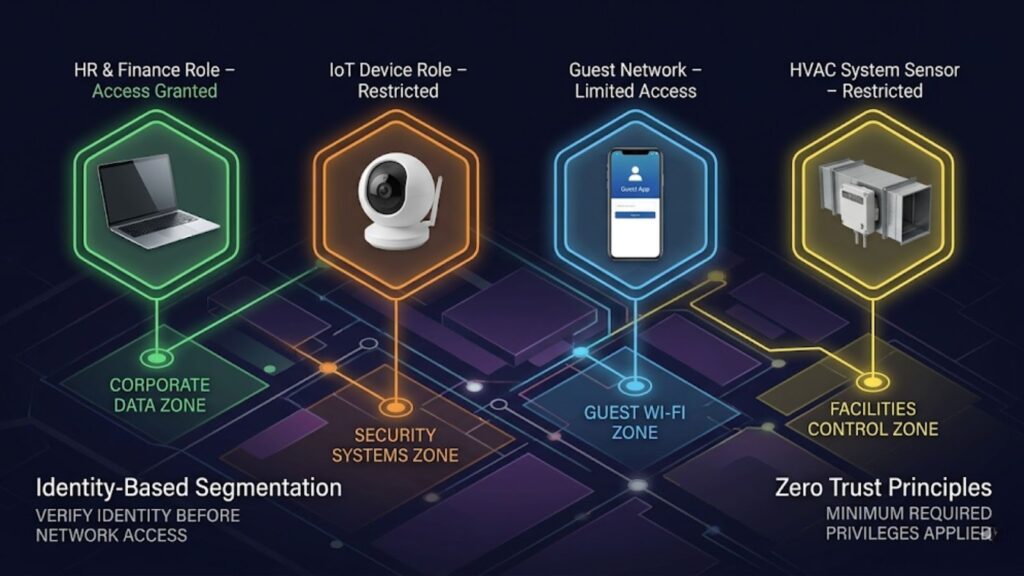
Modern campus networks require more than perimeter security. Arista enables identity-based segmentation, where access policies are tied to users, devices, and roles rather than physical location.
This aligns with principles found in zero trust architecture, ensuring that access is continuously verified and enforced.
Macro vs Micro Segmentation Strategies
Arista supports both macro and micro segmentation:
- Macro segmentation separates large network zones (e.g., departments)
- Micro segmentation applies fine-grained controls between individual workloads or devices
This flexibility allows organizations to balance simplicity and security based on their requirements.
Integration with External Security Ecosystems
Arista campus solutions integrate with third-party security tools, including identity providers and threat detection systems. This ensures that security policies remain consistent across hybrid and multi-vendor environments.
Operational Efficiency Through EOS
Single Operating System Across Network Layers
EOS runs consistently across all Arista devices, eliminating the need to manage multiple operating systems. This simplifies training, reduces configuration errors, and improves operational consistency.
Real-Time Analytics and Troubleshooting
EOS provides real-time analytics that help teams identify and resolve issues quickly. With access to detailed state data, administrators can pinpoint problems without relying on guesswork.
Stateful Fault Recovery and Resilience
One of EOS’s defining features is stateful fault recovery. If a process fails, it can restart without affecting the overall system.
This level of resilience contrasts with controller-based models from Cisco, where failures can impact centralized control planes and disrupt network operations.
Architectural Comparison with Other Campus Approaches
Distributed vs Controller-Based Designs
| Model | Description | Benefits | Challenges |
| Distributed (Arista) | Control and intelligence spread across devices | High resilience, scalability | Requires strong design planning |
| Controller-Based | Centralized control plane manages devices | Simplified policy enforcement | Potential single point of failure |
AI-Driven Operations vs Deterministic Control Planes
AI-driven platforms from Juniper Networks and HPE Aruba Networking focus on predictive analytics and automated decision-making.
Arista, by contrast, emphasizes deterministic behavior:
- Clear visibility into system state
- Predictable outcomes
- Reduced reliance on opaque algorithms
Both approaches have value, but deterministic systems often provide greater control in regulated or mission-critical environments.
Cloud-Managed vs On-Box Intelligence Models
Cloud-managed solutions centralize intelligence in the cloud, while Arista combines cloud visibility with on-device intelligence.
This hybrid approach ensures:
- Local decision-making for performance
- Centralized oversight for management
- Reduced dependency on constant cloud connectivity
Arista Campus Architecture Components and Functions

| Component | Function | Benefit |
| EOS | Network operating system | Consistent control and programmability |
| CloudVision | Central management platform | Unified visibility and automation |
| Campus Fabric | Network design framework | Scalable and simplified architecture |
| Telemetry Engine | Real-time data streaming | Faster troubleshooting |
| Automation Tools | Provisioning and configuration | Reduced manual effort |
Real-World Campus Use Cases
Enterprise Campus Networks
Large enterprises benefit from Arista’s scalability and automation. Distributed architectures support thousands of users and devices without performance degradation.
Organizations often integrate these deployments with broader hybrid infrastructure design strategies to ensure seamless connectivity across environments.
Higher Education Environments
Universities require flexible networks to support students, faculty, and research workloads. Arista’s segmentation capabilities enable secure access while maintaining open collaboration.
IoT and Smart Building Deployments
Smart buildings rely on a growing number of connected devices, including sensors, cameras, and automation systems. Arista’s scalable architecture ensures reliable connectivity and secure communication between these devices.
In some evaluations, organizations compare options from HPE Aruba Networking or Juniper Networks, particularly when AI-driven insights are a priority.
Campus Network Design Models: Distributed vs Controller-Based
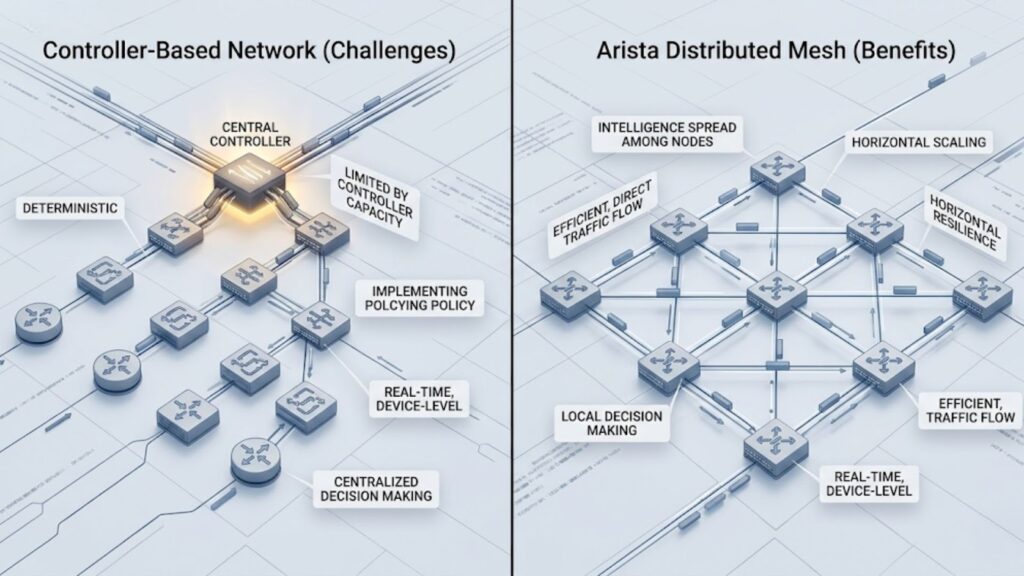
| Feature | Distributed Model (Arista) | Controller-Based Model |
| Control Plane | Distributed | Centralized |
| Resilience | High | Moderate |
| Scalability | Horizontal scaling | Limited by controller capacity |
| Visibility | Real-time, device-level | Controller-dependent |
| Complexity | Moderate | Lower initial setup |
Business and Technical Outcomes
Improved Scalability and Flexibility
Arista campus solutions allow organizations to scale networks without redesigning infrastructure. New devices and services can be added seamlessly.
Reduced Operational Complexity
Automation and centralized management reduce the need for manual configuration. This simplifies operations and improves efficiency.
Organizations focusing on IT cost optimization often see measurable improvements when adopting automation-driven architectures.
Long-Term Cost Efficiency and Future Readiness
By reducing operational overhead and supporting scalable growth, Arista solutions help organizations achieve long-term cost efficiency. This aligns with strategies aimed at cost-efficient networking without compromising performance.
Key Benefits of EOS for Campus Network Operations
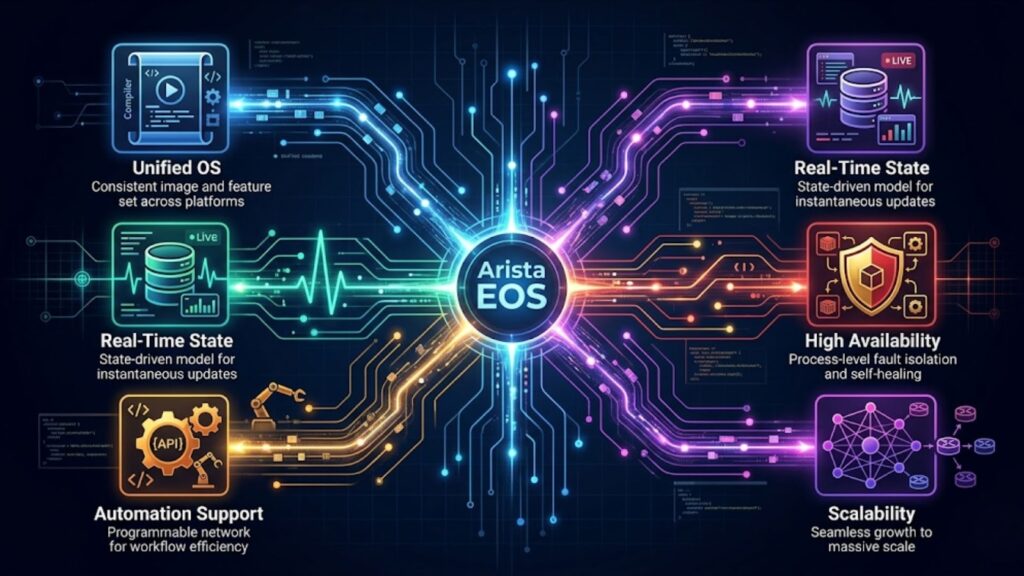
| Benefit | Description | Impact |
| Unified OS | Single platform across devices | Simplified management |
| Real-Time State | Shared system database | Faster troubleshooting |
| Automation Support | APIs and programmability | Reduced manual work |
| High Availability | Process-level fault isolation | Improved uptime |
| Scalability | Supports distributed architecture | Future-ready networks |
Need Help Designing a Scalable Campus Network?
Catalyst Data Solutions Inc can help you design, source, and deploy scalable campus network infrastructure aligned with your performance, automation, and budget requirements.
FAQs
What is Arista EOS and how is it different from traditional network OS?
EOS is a modular, Linux-based network operating system that uses a shared state database. Unlike traditional systems, it allows real-time visibility, process isolation, and consistent behavior across devices.
How does Arista Campus compare with Cisco SDA?
Arista uses a distributed architecture with deterministic control, while Cisco SDA relies on centralized controllers. Arista’s approach offers higher resilience and transparency, while Cisco focuses on simplified policy management through centralization.
Is Arista suitable for large enterprise campuses?
Yes. Arista campus solutions are designed for scalability and can support large enterprise environments with thousands of users and devices.
What are the key benefits of using CloudVision?
CloudVision provides centralized management, real-time telemetry, and automation capabilities. It simplifies operations and improves visibility across the network.
How does Arista handle campus network security?
Arista uses identity-based segmentation, integration with external security tools, and support for zero trust principles. This ensures secure access control across the entire network.