


The global memory market is entering a new phase in 2026. DDR5 supply is tightening as demand accelerates across AI, cloud, and enterprise infrastructure. Organizations planning server upgrades or data center expansion are already seeing longer lead times and rising costs.
This shift is not driven by a single disruption. It reflects a deeper change in how memory is produced, allocated, and consumed. AI workloads are now shaping supply priorities, making memory planning a critical part of infrastructure strategy.
Key Takeaways
- DDR5 shortage in 2026 is driven by AI infrastructure demand shifting memory production priorities
- Limited manufacturing capacity and advanced node constraints are tightening DDR5 supply and increasing pricing volatility
- Enterprise upgrades and AI workloads are increasing memory density requirements across modern server environments
- Early planning, flexible configurations, and diversified sourcing help reduce risk from memory supply disruptions
What Is Driving the DDR5 Memory Shortage in 2026?
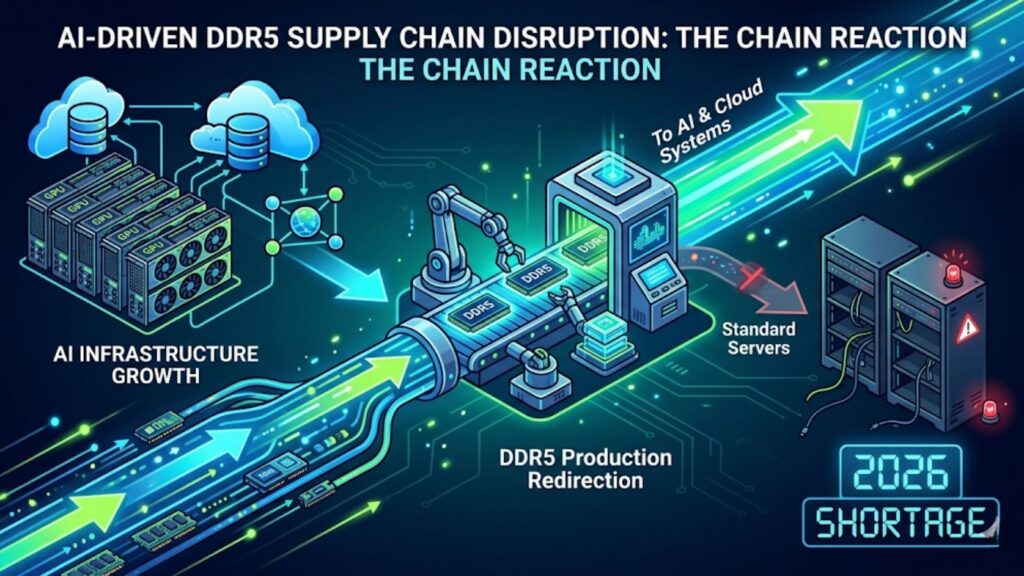
The DDR5 shortage is driven by rapid AI infrastructure expansion, which is redirecting manufacturing capacity toward high-performance memory.
Memory production is being reshaped by long-term AI investment. Cloud providers and hyperscalers are building large-scale AI clusters, and these systems require advanced memory configurations.
Key drivers include:
- AI infrastructure growth: Large-scale deployments are increasing demand for high-performance memory
- Production prioritization: Manufacturers are focusing on higher-margin memory products
- Limited fabrication capacity: Advanced nodes and packaging are constrained
- Multi-year demand cycles: AI investment is sustained, not temporary
In many environments, memory is now planned alongside compute and acceleration. This is especially true in deployments involving GPUs, where AI cluster design depends heavily on balanced memory architecture.
Why DDR5 Is More Affected Than DDR4
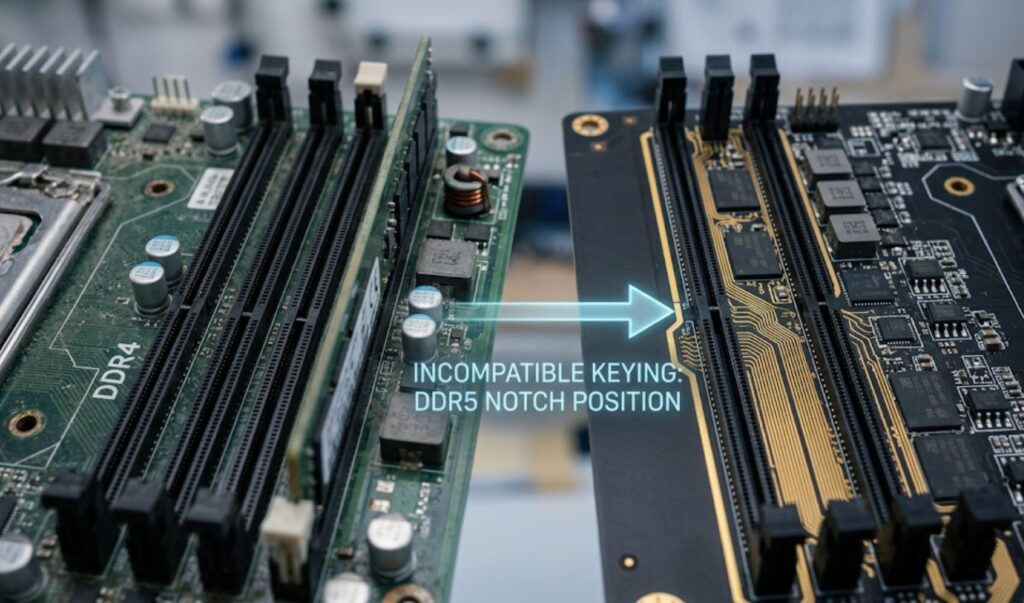
DDR5 is more affected because it is the standard for modern server platforms and requires advanced manufacturing resources.
DDR5 adoption is accelerating as new server architectures depend on higher bandwidth and density. This transition is happening at the same time as AI demand is increasing pressure on production.
Several factors amplify the impact:
- Platform shift: New CPUs are optimized for DDR5
- Higher density requirements: AI and analytics workloads require more memory per node
- Shared production resources: DDR5 competes with other advanced memory types
- Faster adoption cycles: Enterprises are upgrading infrastructure more quickly
As organizations refresh systems from older platforms, DDR5 becomes a dependency rather than an option.
How AI Demand Is Reshaping Memory Supply
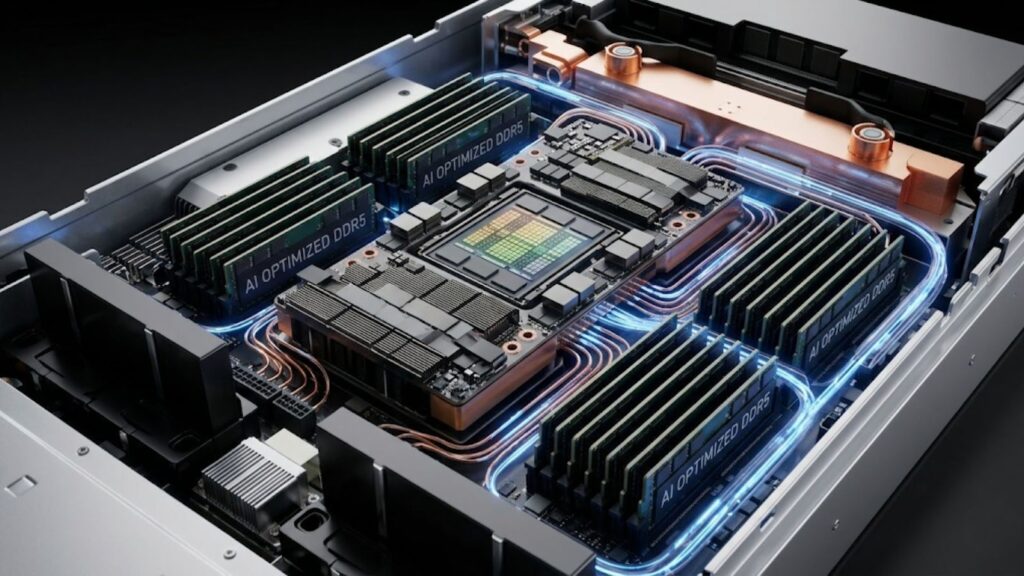
AI is no longer a niche workload. It is becoming a foundational layer across industries, and memory plays a central role in that transformation.
AI workloads require:
- Large memory pools for training models
- High bandwidth for data movement
- Low latency for real-time inference
These requirements shift supply toward memory optimized for AI environments. For example, systems powered by NVIDIA GPUs rely on tightly integrated memory configurations to maintain performance at scale.
This shift is already reflected in how modern server platforms are evolving. Leading enterprise systems from vendors like Dell Technologies, Hewlett Packard Enterprise are increasingly designed to support higher DDR5 capacity and bandwidth, aligning with the demands of AI-driven workloads rather than traditional compute patterns.
In practical terms, memory is now part of the same planning cycle as compute and storage. This is reflected in modern server builds, where GPU server planning integrates memory capacity early in the design phase.
Key Market Signals: Pricing and Supply Trends
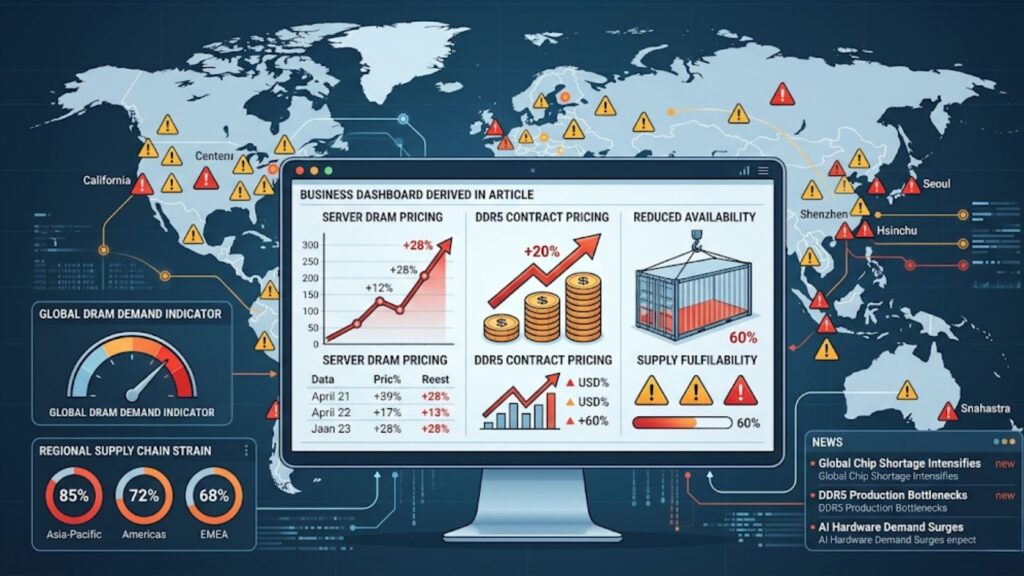
Several indicators highlight the scale of the current shortage:
| Metric | Trend | Impact |
| Server DRAM pricing | Significant increases reported | Higher project costs |
| DDR5 contract pricing | Upward revisions | Budget uncertainty |
| Supply fulfillment | Reduced availability | Delayed deployments |
| Market outlook | Tight through 2026–2027 | Long-term planning required |
These trends show that the issue is not short-term. Organizations should expect continued pressure on pricing and availability.
Impact on Enterprise Infrastructure Teams

The shortage affects planning timelines, system performance, and procurement strategies.
For IT teams, the effects are both direct and indirect. Memory constraints often appear as performance issues or project delays rather than immediate shortages.
Common impacts include:
- Longer lead times: Delays in sourcing specific DDR5 modules
- Budget variability: Rapid pricing changes affect forecasts
- Reduced system efficiency: Suboptimal memory configurations
- Extended refresh cycles: Older systems remain in use longer
These challenges are especially visible in environments scaling AI workloads or modernizing data centers. In such cases, infrastructure planning often extends beyond servers to include power and cooling considerations, where data center cooling strategies become part of the same discussion.
How to Reduce Risk During the Memory Shortage
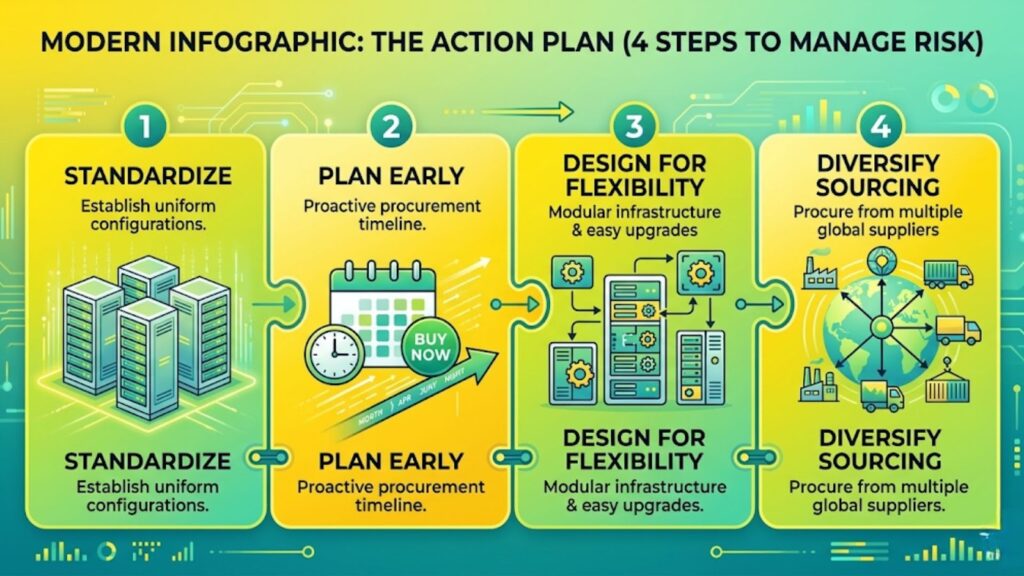
Early planning, configuration flexibility, and procurement strategy reduce exposure to supply disruptions.
Organizations can take practical steps to manage risk:
1. Standardize Configurations
- Use consistent memory sizes across systems
- Limit dependency on rare or specialized modules
- Validate multiple compatible options
2. Plan Procurement Earlier
- Initiate purchasing cycles sooner
- Track lead times across components
- Consider phased deployment strategies
3. Design for Flexibility
- Leave capacity for future expansion
- Avoid rigid configurations
- Align memory planning with compute scaling
4. Diversify Sourcing
- Avoid reliance on a single supplier
- Evaluate alternative configurations
- Align procurement with project timelines
In many cases, organizations benefit from aligning sourcing with broader infrastructure planning, especially when managing complex environments through hardware sourcing strategy.
What to Expect Beyond 2026

The memory market is expected to remain tight in the near term. While production capacity will expand, demand from AI and data-intensive workloads continues to grow.
Key expectations include:
- Gradual improvement in supply conditions
- Continued demand from AI-driven infrastructure
- Increased importance of long-term planning
- Memory becoming a strategic resource, not just a component
This shift marks a structural change in how memory is viewed within IT environments.
Are You Prepared for DDR5 Supply Challenges in 2026?
Managing DDR5 constraints requires the right balance of performance, availability, and planning. Many organizations work with Catalyst Data Solutions Inc and trusted enterprise infrastructure experts to align memory sourcing and server design with evolving AI demand.
If you’re planning upgrades or scaling data center capacity, the right approach can reduce delays, control costs, and keep your infrastructure running efficiently.
FAQs
Is the DDR5 memory shortage only affecting AI companies?
No. While AI demand is a primary driver, the impact extends to enterprise IT, cloud infrastructure, and general server deployments.
Why are DDR5 prices increasing in 2026?
Prices are rising due to limited supply, increased demand from AI workloads, and constrained manufacturing capacity.
How can organizations avoid delays caused by memory shortages?
Early procurement, flexible system design, and validated alternative configurations help reduce delays.
Will memory supply improve after 2026?
Supply is expected to improve gradually, but demand from AI and data-intensive workloads will continue to influence availability.
Why is memory planning becoming more important?
Memory directly impacts system performance, scalability, and cost efficiency, making it a key factor in infrastructure decisions.